UK #ad rules for TikTok creators
Once you start earning from TikTok, even with free products, UK ad rules apply to you. Here is the short version of what the ASA and the CMA expect. It isn’t legal advice.
Updated November 2026 · written for UK readers
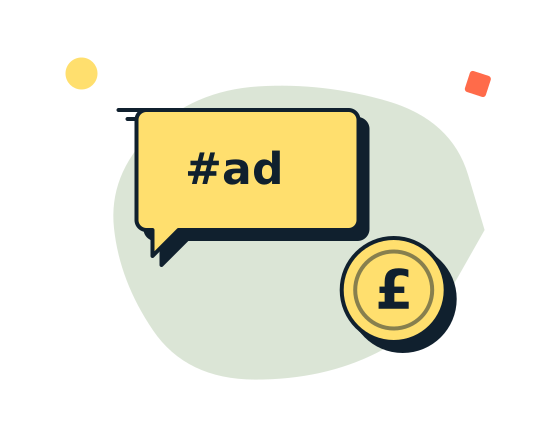
The regulators involved
Two bodies matter for UK creators. The Advertising Standards Authority (ASA) enforces the advertising codes, which require ads to be obviously identifiable as ads. The Competition and Markets Authority (CMA) enforces consumer protection law, which bans misleading people, including by hiding that you were paid. Their joint guidance for influencers is free to read on their websites, and worth reading in full.
When something counts as an ad
Broadly, a post is an ad if a brand paid you, in money or anything else, and had some control over the content, or if you are promoting your own products or services. Affiliate links, where you earn when people buy, count too. Gifts are a grey area that gets less grey quickly: if a brand sent you something free and you post about it, the CMA expects you to make that clear.
Labelling, done properly
- Use a clear, upfront label such as #ad or Ad, visible before people engage, not buried after a string of hashtags.
- TikTok’s own content disclosure setting helps, but the guidance is that you should still make it obvious in the video or caption itself.
- Avoid vague labels like #sp, #collab or “thanks to…” on their own; the regulators have said they aren’t clear enough.
- Say it in the video too if the ad is mostly spoken.
Gifted products and affiliate links
For gifts with no obligation, the CMA still wants the relationship disclosed, for example “gifted” in a clear place. For affiliate links, label the content as an ad. For your own business’s products, make it obvious it is your brand.
Fake engagement and misleading influence
The CMA has taken the view that using fake followers, likes or reviews to mislead consumers or brands about your influence can breach consumer protection law. In practice, that matters most when you sell your audience: if a brand pays you based on reach, the figures you show them should be genuine. Bought followers don’t appear in the analytics that matter (views, watch time, audience location), so be honest about what your numbers are. Our guide to spotting fake followers shows what brands check.
A quick checklist before you post
- Was I paid or given anything, or is this my own product?
- Is “Ad” or “#ad” visible at the start, before any “more”?
- Is TikTok’s disclosure toggle switched on?
- Would a viewer realise this is advertising without reading the small print?
- Are any claims about the product true and backed up?
Where to read more
The ASA and CMA publish a joint influencer guide, and the ASA has more detailed advice on social media ads. If you are working with brands regularly, they are worth bookmarking. Our sponsored post calculator helps with the other half: knowing what to charge.
Short replies to common doubts
Do I need to put #ad on gifted products?
Is TikTok’s disclosure setting enough?
Is #sp or #collab enough?
Can I be fined for not labelling ads?
Carry on reading
 TikTok LIVE and Creator Rewards in the UK
 How to spot fake TikTok followers
 Sponsored post calculator
 Is it safe to buy TikTok followers?
When you’re ready, it takes two minutes
TikTok followers from £2.99 and likes from £1.49, paid once in pounds.
See the packs